
“I think that this band saved my musical life, and possibly my actual one,” Nate Fredrick says of his group the Wholesome Boys.
Fredrick is calling from the band’s studio space in Nashville, where he spends most of his time between touring and the occasional trip to his native Springfield, Missouri.
He learned to play guitar at 12, inspired by Van Morrison, Guy Clark, and Creedence Clearwater Revival, and in his early 20s started writing music. After moving to Nashville, Fredrick met a group of fellow songwriters and performers, collaborating with and showcasing their talents over a two-year period. As part of the Nashville Revival movement, the artists created more traditional, roots-oriented Americana music that pushed back against the inauthenticity of the pop-flavored, chart-topping country songs that flooded the city’s music scene in the early 2010s, focusing more on lyrics and storytelling.
As a result, Fredrick released his first single, “Paducah,”—an ode to finding yourself through traveling on the highway—and then, in February 2021, his debut album, Different Shade of Blue. The album garnered positive reviews and earned him spots touring with Morgan Wade, Muscadine Bloodline, and Clint Black.
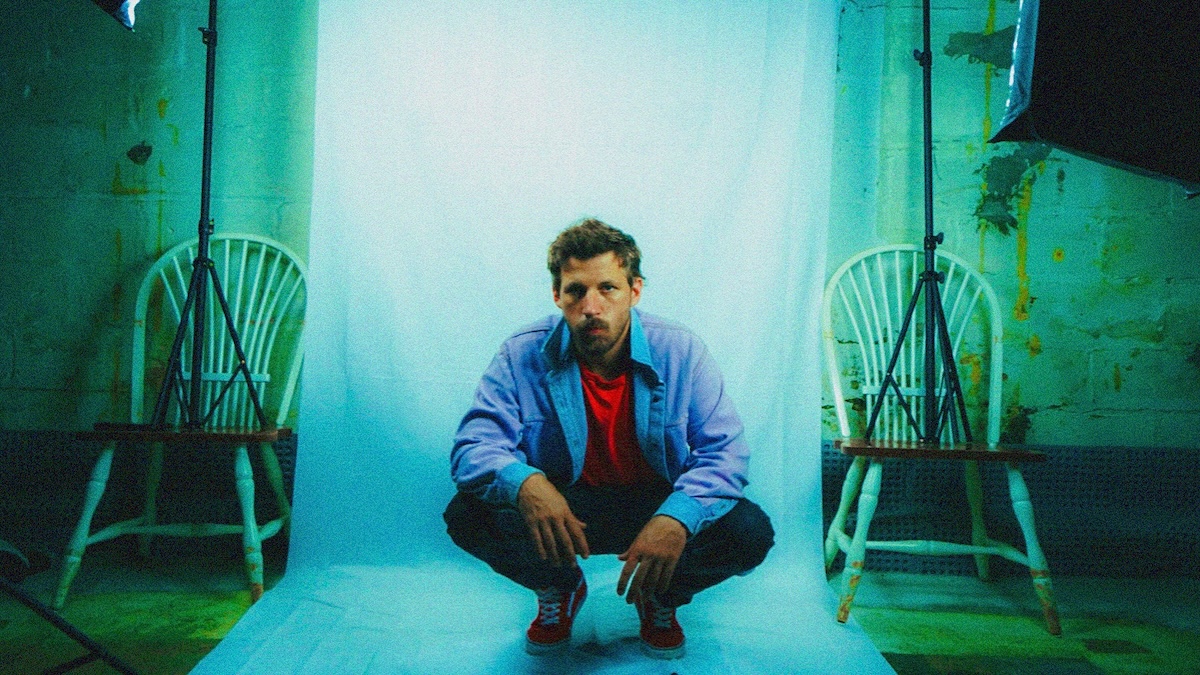
While working at a local bar, Fredrick had befriended fellow musician Frank Patrick James and the two started playing together. While James liked the idea of forming a full band, Fredrick was hesitant.
“There was a spiral that I was going down in 2019, 2020… I wasn’t really growing, and I was just kind of spiraling down the drenched hole of being a songwriter,” he says. “And I wasn’t looking at it like a good struggle. I was looking at it like a “woe-is-me-struggle.”
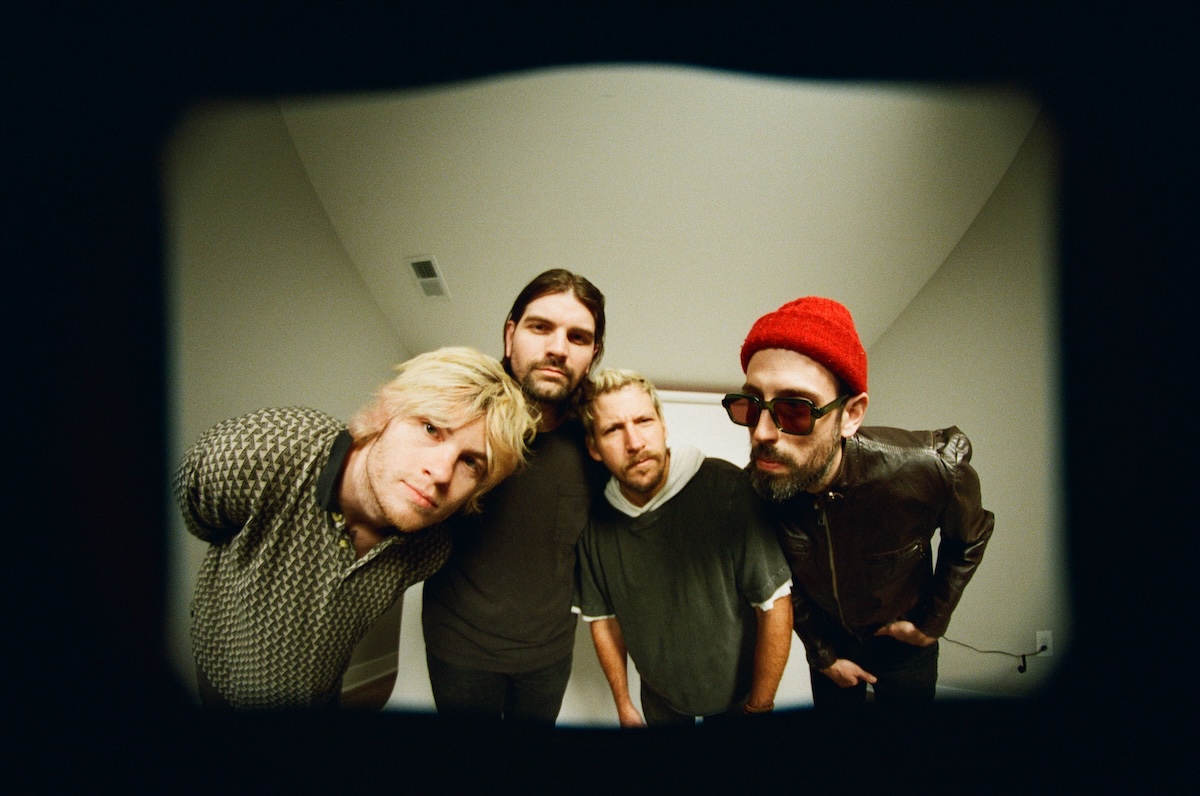
Eventually, though, Fredrick and James brought on Andrew Foreman on bass and drummer Dylan Miller, forming Nate Fredrick and the Wholesome Boys. But Fredrick says something didn’t feel right about it. He didn’t want to lead a band; he wanted to be an equal part of one.
“You’re building a bridge with other people and walking on it simultaneously,” he says. “I feel very lucky that that’s the first band that I’ve ever been in. I was never in a seventh- or eighth-grade garage band. Most of my bandmates have been in bands their whole lives. But they’re like, ‘This is different. It’s special.’”
So, the rock band became known simply as the Wholesome Boys. They released their debut self-titled album in late 2025.
While the Wholesome Boys is releasing a new single, “New York City,” on May 22, Fredrick is returning to his solo music as well. He’s releasing a new, slowed-down, acoustic version of “Paducah” on February 26 to celebrate the fifth anniversary of Different Shade of Blue, which has since garnered more than 7 million streams. He’s also currently working on his second solo album, as well as a new four-volume acoustic project called Old, New and Under Review, both expected to come out later this year.
You got into songwriting in a rather unconventional way. Tell me about that.
I didn’t start writing music until I was 20 years old. I was partying one summer and fell off of a ravine and shattered my jaw. And so during that time when I was having my jaw rebroken and it was wired shut, I started to write, and that was actually when I first ever sang, was with my jaw wired shut and singing to the guitar chords that I knew at the time. Not a traditional singing journey and not a traditional guitar journey either.
Did you ever perform with your broken jaw?
I was living with a friend of mine in Springfield, Missouri, and he worked at a place called Springfield Brewing Company. And there was an artist that had a residency there, and I was sitting up at the bar, drinking some cheese soup and I think I had been healing for two weeks. And he had heard me back at home picking on a Ryan Bingham song called “Tell My Mother I Miss Her So.” He talked to the artist and was like, “I wanna have my friend come up and sing.” And so the first time ever behind a mic singing was with my mouth wired shut and braces in my mouth, my whole jaw is metal from ear to ear. It was a pretty intense accident.
I really enjoy your music, particularly your solo stuff. It reminds me of Gregory Alan Isakov.
What songs got you there?
I listened to your new acoustic version of “Paducah,” and for some reason I kept going to “If I Go, I’m Goin’.” It’s not that it sounds the same, but there was a certain…
It’s the feel.
Yeah. There was a certain feeling of comfort I got when listening to “Paducah.”
He definitely builds it. Dude, I think we’re definitely on the same page with what draws me into tunes. It’s the evocation of whatever scene is being built, sonically. I love movies, probably more than I love songs. And it’s like that. As long as you’re subservient to that and everything is cohesive, anytime you try to do something that may not fit within the cohesion of that, that’s when it feels a little forced and messed up.
I feel like as I move forward, my sound will always be a byproduct of my environment, whatever it is that I’m doing based around that song and that vibe. I’m just trying to be subservient to whatever it’s asking. And so I don’t identify as a country artist or Americana or a frontman of a rock band. It feels much more like a character actor just being like, what character is this? What role does this song play? How can I channel that in the best way possible?
There’s a great song on The Wholesome Boys called “Beyond The Reach.” What was the inspiration for that song?
I feel that song every night we play it, man. I thought being a solo artist was hard, but being in a band and really doing it from the ground up, it’s a serious operation… sometimes you get exactly what you want, but you don’t know if you can handle it. And that’s throughout that song, that type of pain. The scariest thing is not getting what you wanted, it’s not being able to handle it if you get it.
If you could have dinner with one of your music idols, like Van Morrison, what’s the one question you’d ask them?
I would ask what the song does for them? Like, why do they write? What are they searching for? Are they sharing? What type of fuel is in that song? What does it do to you? Did it save you? Is it a burden? Does it make you feel alive? Why do you do it?
Why do you do it? What does it do for you?
It makes me understand myself better. There are things that songs have taught me from inside of me, self-healing from it, things I can’t really explain or no one else can tell me. But sometimes it comes out in a song where I’m like, “Thanks for that, universe. Thank you for letting me tell myself that because I may not have listened to anybody else.” It just has made me a better person. And it’s almost killed me, you know? And it’s had me dig down deep enough that I pulled up a bunch of bad. But it’s also given me these relationships with people that I never would’ve had otherwise. And it’s just given me a different lens to life and humanity. Music is a microcosm to existence, in my opinion.
I played junior golf and played golf in college for a little bit and there was a quote that somebody gave in the newspaper. They were doing an interview, and this lady was a great golfer.I think she was fighting cancer. She said, “How you play golf is how you play life.” And I believe that in music, the way that you write, the things that come out are a lens into your personality. It’s how you react to the things that happen in your world. It’s how you relate to other people. It’s all your fears and your soul in a roll. All those things come out in a musical endeavor. And to get to see that, look at it, be embarrassed of it, but then give yourself grace. Whether you like it or not, it gives you a tether back to being able to really know yourself better.
And see your growth.
Yeah, in the pursuit of organizing this sound and these emotions. That’s why music can be a therapy.
Is recovery part of that process?
Yeah, I attached getting really fucked up with creativity. And I do think it allows you to get out of your own way, but it doesn’t allow you to actually feel what’s going on. So if you can figure out how to get there with your senses heightened, oh my god, it is the drug. It’s the most natural. That was the biggest fallacy ever, that I need to dumb down what I’m doing so I can get out of my own way so I can get to this. But then when it even comes to me, I don’t feel it anyway. So that was something I got to realize on the road with the band. Touring is a lot easier when you’re taking care of yourself.
One of my biggest issues, creatively, is overthinking and getting in my own way.
Yeah, I think all the time. And that’s that human microcosm thing, too. Music will teach you how to do it, or it will expose you when you’re hiding from yourself.
My friend, Michael Landis, he’s a writer, and it’s so interesting that the conversations I have with him and I’m having with you, like, this is all the same thing. This ain’t about what instrument you play or if you sing or the genre. The arts are such a beautiful gift that we are given in life to be able to just understand what’s going on.
Being a creator can be infuriating, too.
Well, yeah. It’s that, too, I used to fight that. There’s a beauty in the ebb and the flow of it. If you can learn to appreciate the process, that’s where it is. Ben Rice was our producer on The Wholesome Boys record. And he would always say for us to get out of the way so that magic can enter the room. And boom! It comes together. But you needed to get there. Same thing with shows. Most of being a touring musician—driving, sleeping in uncomfortable places, taking care of yourself, staying hydrated, not fighting with your spouse or your bandmates—you’re doing it all for 30 minutes to an hour when you’re on stage. And it makes all of that worth it.
Has it gotten easier for you to get out of your own way?
Yeah, sometimes. I just know that it’s true, whether I want to align with it or not. And so I surrender to it. I think after the first song you write, it does get easier. It’s never easy, but maybe the weight doesn’t get any lighter. You just get stronger. You just get better.
Leave a comment