
“Oh, I get to know somebody in the first five minutes,” says Lynn Goldsmith, the creator of some of the most memorable portraits from the ‘70s and for decades after, shooting major artists from Bob Dylan to Bob Marley, Blondie to KISS.
“If you want them to stay longer than planned,” she adds of her subjects, “you have to be someone that they are entertained by, that they’re learning from, and that they feel like they’re making work with you. Any really good photographer, you’re also in part like a psychiatrist.”
A selection of her work is gathered in an exhibition, Lynn Goldsmith: Music in the ’70s, which opened November 13 at the Morrison Hotel Gallery in West Hollywood, California, and moves to the gallery’s New York branch December 4. Among the pictures are dynamic portraits of Al Green, Tom Petty, Van Halen, Rod Stewart, the Runaways, Lou Reed, Bowie, and Led Zeppelin.
The 1970s offered a dazzling array of sounds in popular music, including punk, disco, hip-hop, metal, and more. Goldsmith’s pictures documented those explosive genres of creativity, appearing throughout that decade on album covers and in the pages of Time, Newsweek, Circus, Creem and Rolling Stone. She’s now done 17 books, including large volumes on two of her greatest subjects from that decade: Bruce Springsteen and Patti Smith.
Included in the exhibition is a large print of her 1971 still-life of Elton John’s colorful platform shoes. “I mean, why would you not photograph those?” she adds with a laugh.
Before she chose photography as a profession, Goldsmith had pursued careers in television as a director of ABC’s “In Concert,” in A&R at Elektra Records, and band management for Grand Funk Railroad. She was already passionate about taking pictures, and carried a camera everywhere. Becoming a photographer full-time turned her into a kind of solo artist, as she talked her way into the presence of some otherwise private artists, carrying multiple cameras and lenses.
“I knew that it made me happy that there were less people involved that I had to convince of things, and it also allowed me to have relationships with other artists,” she says. “Many of these people also take pictures. Lou [Reed] took pictures, Patti takes pictures. We’re all artists that do a variety of things that get known more or less in one area.”
Goldsmith grew up mostly in Detroit, and in the 1960s was the singer in a band called the Walking Wounded, which was part of the same Detroit rock scene that included the MC5 and the Stooges. (In the ’80s, she released an album of dance music on Island Records under the name Will Powers.) In 1976, she founded the LGI Photo Agency, one of the first to specialize in celebrity portraiture.
“I’ve always been more or less a polymath. People like to identify me as a photographer and then as a rock and roll photographer,” she says. “And I’m grateful I’m identified as anything.”
For a time that decade, she dated Bruce Springsteen during his Darkness on the Edge of Town era, and her pictures of the Boss reflect their connection. She says knowing someone so well leads to different kinds of pictures than a normal session ever could. “It’s the best, because they get used to you making pictures all the time,” she says.
Also in the show is a photograph of Ozzy Osbourne from when Black Sabbath performed at the massive Cal Jam festival in 1974, where she was directing a network television crew. She also interviewed the singer on camera. “At the same time, he keeps calling me ‘babe’ when he’s answering my questions,” Goldsmith recalls. “I’m from Detroit and there’s such a thing as women’s lib. It’s like, do not call me babe. I really wanted to slap him.” She laughs. “But he was a nice guy. It’s just the way those English guys talk.”
As a photographer, Goldsmith was drawn to many different subjects, but understands that her own notoriety is forever connected to the pictures that helped turn many of these music artists into icons. “Even though I don’t support the kind of worshiping of the golden calf, I have been guilty of creating the golden calf. I’m part of it,” Goldsmith adds. “I really do think that people need heroes and they need stories that they can put their faith in.”
Patti Smith at the Beach
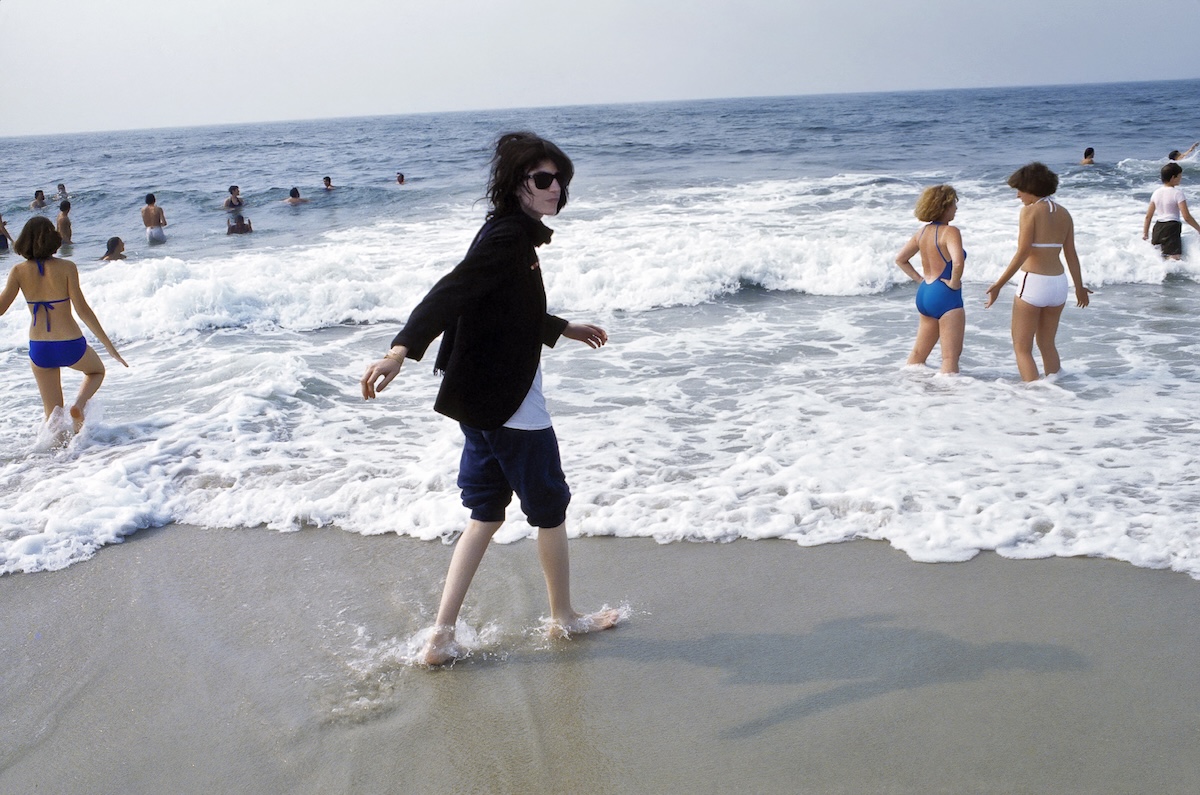
“I love this picture,” says Goldsmith. “She would call me up sometimes and say, ‘So and so’s got a car. Let’s go to the beach.’ She would wear all black. I’m in my bathing suit: ‘I thought we were gonna, like, go swimming.’ ‘Oh, no, I don’t swim.’
“Collaborating with Patti is fun because you make something that neither one of you expected. She might bring props. I have props, things happen. You have a plan of what you’ll do, but you’ll leave it open for other stuff to happen. You don’t have to pull things out of her. She works with the camera. She’s like a model. As soon as you aim the camera at her, she has an identity, she will project a feeling. So you don’t have to work to make that come out. And it allows you to go to, like, a much more open and creative space.”
Bruce Springsteen Live
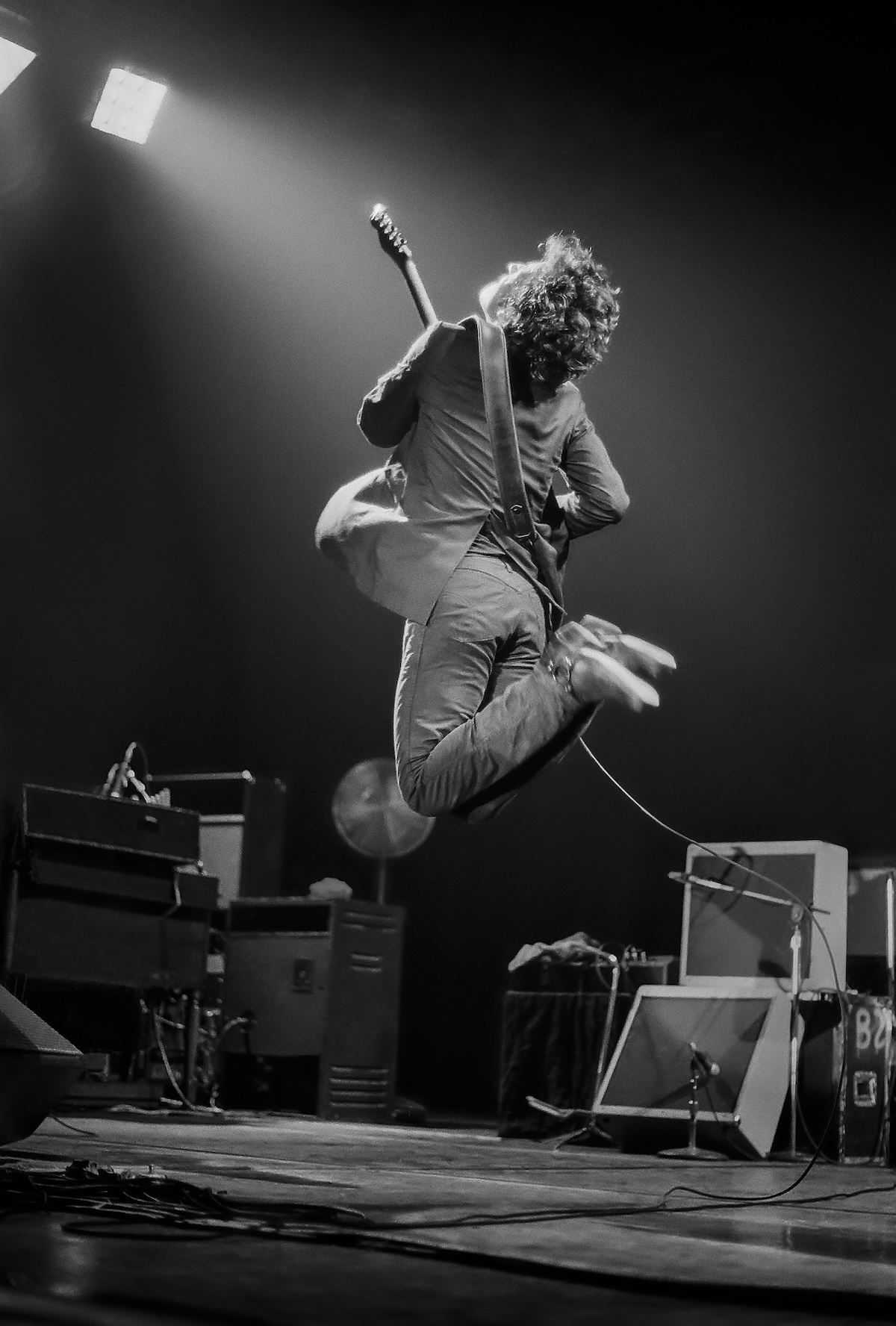
“It’s not really about Bruce,” says Goldsmith. “It’s more about the fans. And it’s about what his show represents. So for me, to be holding a guitar and playing, to jump that high, and the way the light is … It’s like he’s rising into the light. And that’s where he takes the audience. That’s the whole purpose. We’re like all one together going into the light. We have the same problems.
“He did have a visual sense of himself, and he could very clearly pick out the images that he knew reflected the Bruce he wanted the public to connect to his music. He was very adept at that. A lot of them don’t know how to do that. He’s conscious visually.”
The Police in New York
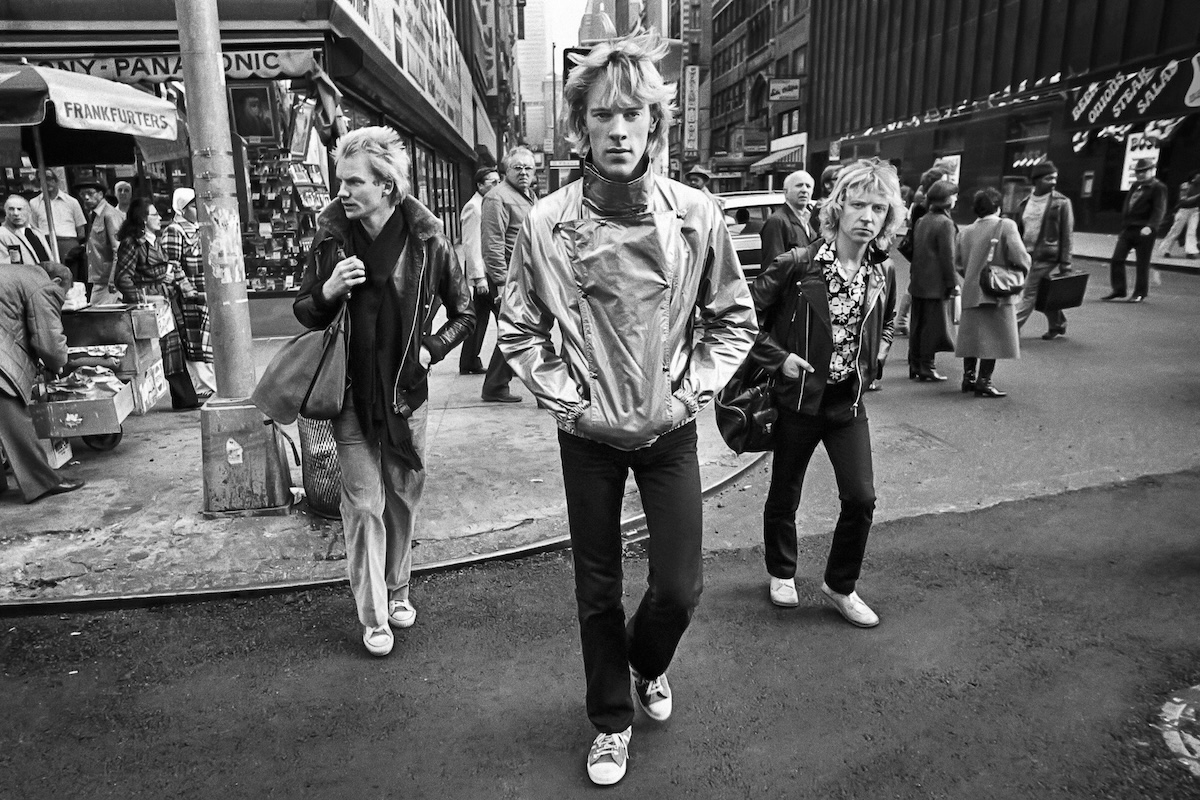
“The Police were really smart,” says Goldsmith. “They were interested in other things. [Singer-bassist] Sting was really well read. [Drummer] Stewart Copeland was making movies. [Guitarist] Andy Summers was into a lot of things and then got more into photography. I like to think I influenced that.
“I didn’t know who the Police were. I’d never seen them. This was like 42nd Street, 36th Street, something in my neighborhood. [Copeland] is the tall guy, right? Now, tall guys just graphically should be in the back because you’ve got shorty over here. This guy keeps coming forward. I said, ‘You are the drummer, aren’t you?’ He said, ‘How did you know that?’ I said, because drummers are always in the back of the stage and don’t get the attention. So when they can, like, get that opportunity.”
Frank Zappa Backstage
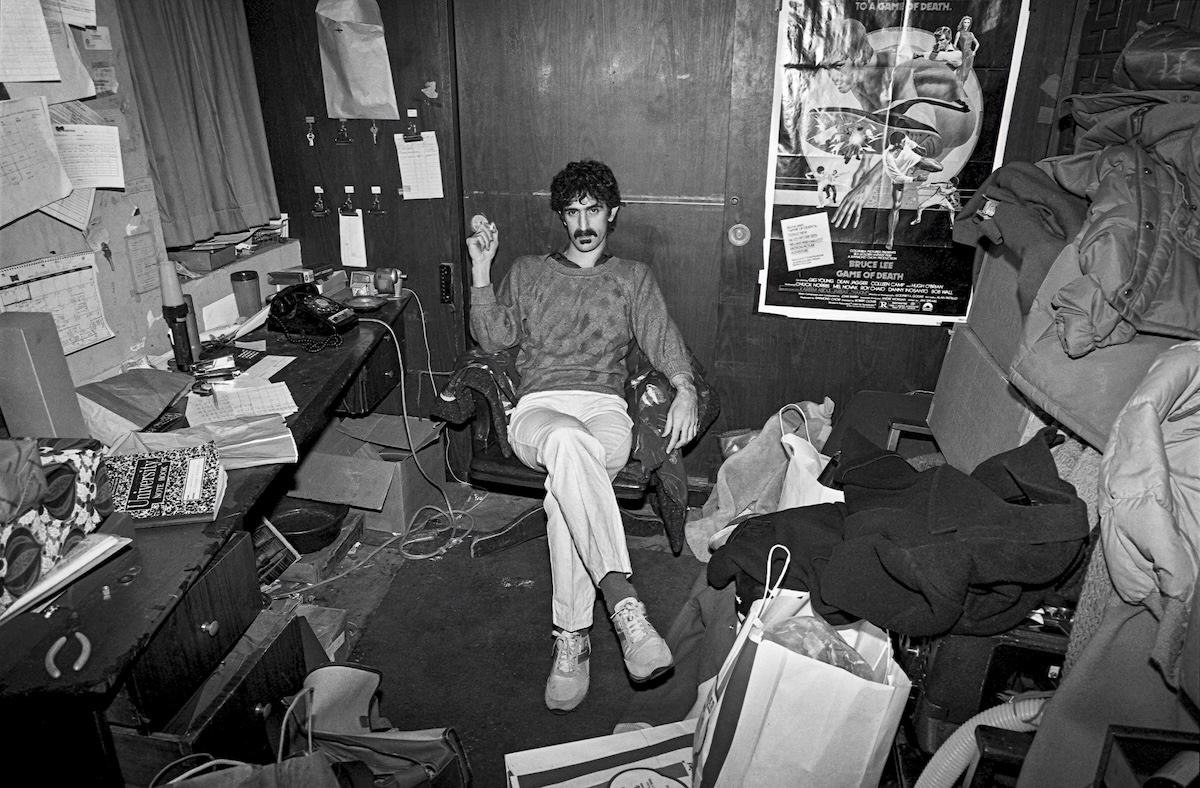
“Frank was the smartest and the funniest of all of them, really,” says Goldsmith. “He clearly was way above. I’m not saying musically. I didn’t understand what he was doing. I didn’t like Frank’s music. It drove me nuts. But Frank? Jesus—funny, brilliant, inspirational to be around, kind to people. He was someone I really looked up to.”
Billy Idol in London
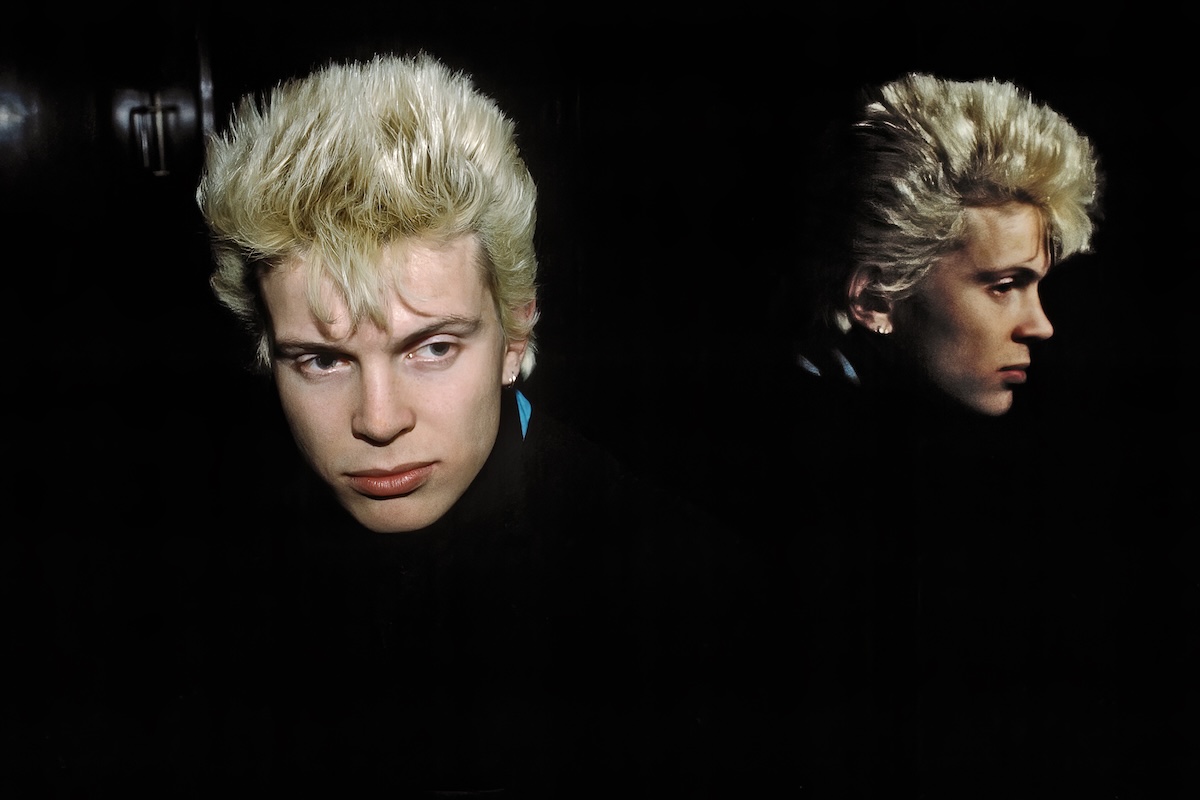
“This is Billy Idol,” recalls Goldsmith. “I was in London at a club and I went to the bathroom and I always have my camera on me. And when I came out [and saw him], he wasn’t ‘Billy Idol.’ I just thought he looked great. So I said, ‘Do you mind if I take your picture?’ He had that really low-end English accent: ‘No, go ahead, blah, blah, blah, blah, blah.’ And so I did it and we started talking. He was there because his girlfriend [Perri Lister] was performing. She had red hair. She was popular. But I was there with these very wealthy people, a couple that I knew. And they invited Billy and his girlfriend back to the house. And he was so intimidated by their wealth, you know? He was so cute. I mean, not my type. So sweet.”
Leave a comment