
On a frosty January afternoon at New York City’s Ripley-Grier Studios, Emily Saliers, Beth Malone and Starstruck’s director-choreographer Lorin Lotarro are together, deep in rehearsal—deeper still, in conversation—about something entirely new to Saliers.
Rather than fresh material from the Indigo Girls—the liltingly melodic, socio-conscious folk duo she and Amy Ray formed in 1985—Saliers is bracing to make her debut in musical theater as the composer of Starstruck.
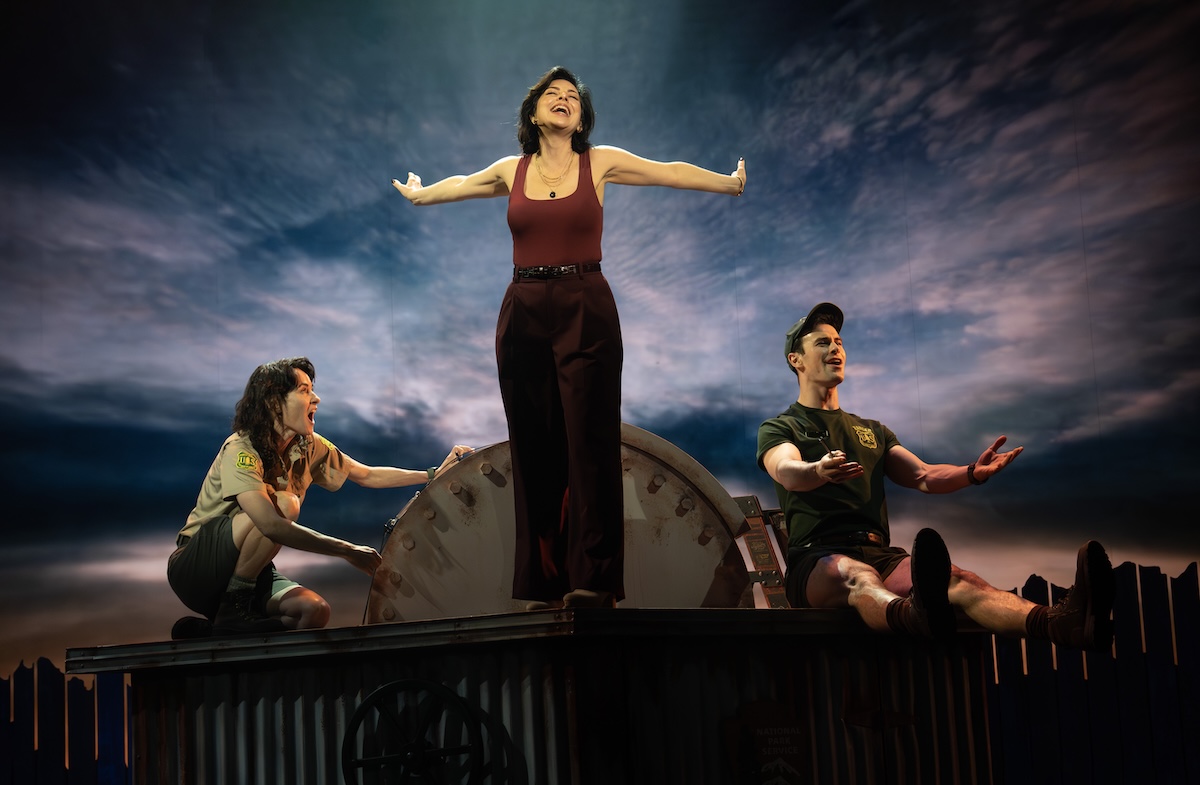
Starstruck—a Cyrano de Bergerac-like tale of 17th century romance with a modern LGBTQ+ twist—premieres not in NYC but at New Hope, Pennsylvania’s legendary Bucks County Playhouse beginning February 28. It stars Tony nominee Beth Malone (Fun Home), who also co-wrote the script, and Broadway vets Krysta Rodriguez (Smash) and Sam Gravitte (Wicked).
Saliers starts the conversation on Starstruck with the notions of instant camaraderie and gut instinct when it came to meeting Malone through mutual acquaintances during the pandemic, then swiftly becoming this new show’s songwriter.
“My friend said Beth wanted to ask me about writing music for her script, so no sooner than we met, Beth starts telling me about this script she’s loosely based on the Cyrano tale,” says Saliers. “But, before she even really asked me, I said, ‘Yes. Yes, I do.” I had no idea what I would be in for. I had never written for musical theater before, but suddenly I was all in.”
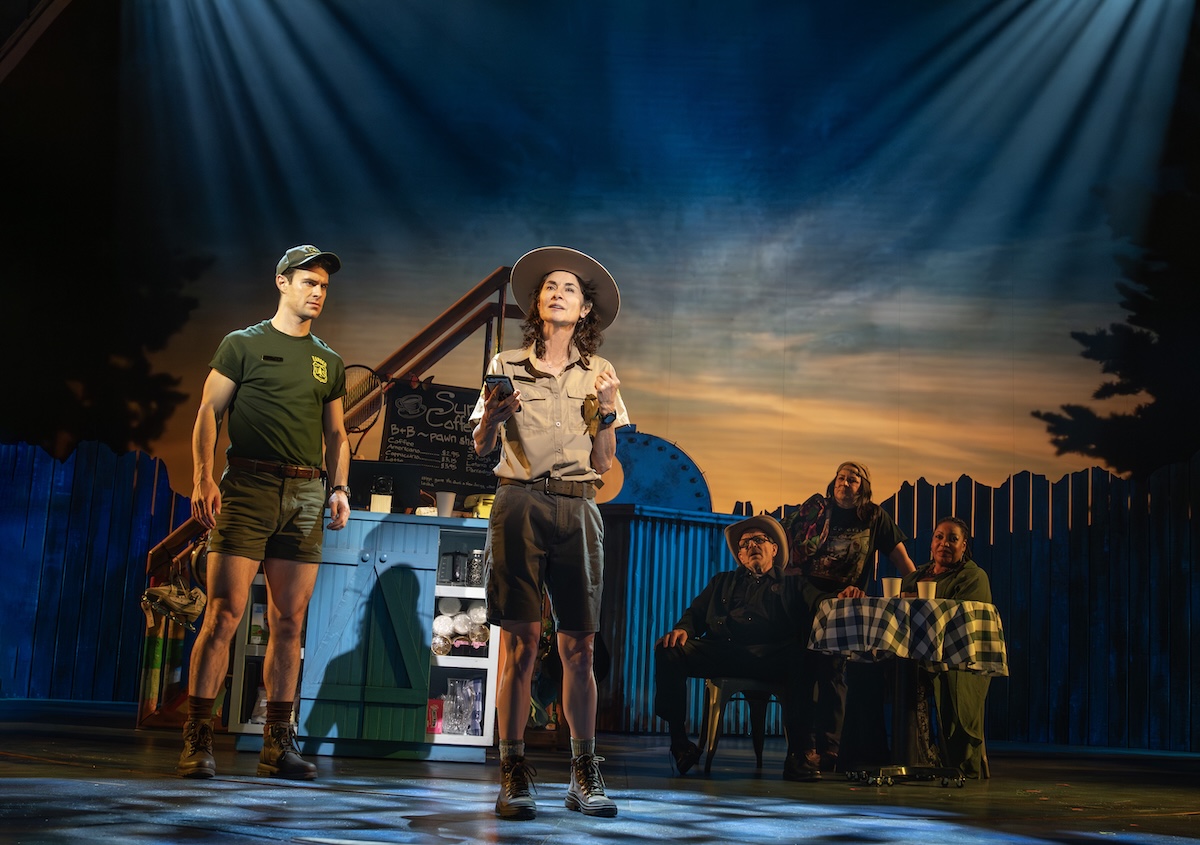
Malone, an actress and vocalist with Broadway credits including 2006’s Johnny Cash jukebox musical Ring of Fire, revivals of classics such as Annie Get Your Gun, and the ruminative Fun Home, not to mention film appearances such as 2025’s Oscar-nominated Song Sung Blue, had a hopeful eye towards collaboration with the Indigo Girl.
“I was a first-time book-writer—I had no business even asking Emily—but it was the pandemic, we’re all just sitting around, and it really was just a ‘Why not?’” Malone says with a laugh. “And for Emily, it was definitely more of a ‘Why not?’ than it was ‘Yes, I want to spend the next seven years with you in a tiny room hashing out the minutiae of your first-ever script.’ Look, I asked for a pie-in-the-sky impossible dream shot, and she said ‘OK.’”
Truth be told, the bravura behind just saying “yes”—the call of every daring theater improviser—and putting herself out there when she didn’t have a clue of theater’s necessities is exactly what appealed to Saliers about working on Starstruck in the first place.
“Just saying yes” is what pushed Saliers to compose her first score for the indie short film One Weekend a Month in 2004, and provoked her to make a solo album, 2017’s Murmuration Nation, which welcomed guest vocalists Jonatha Brooke, Jennifer Nettles, and Lucy Wainwright Roche as if Saliers was casting a musical.
For an artist whose music is renowned for bucolic melodies and gripping romanticism, Saliers is, in reality, hotly fueled by risk of the unknown.
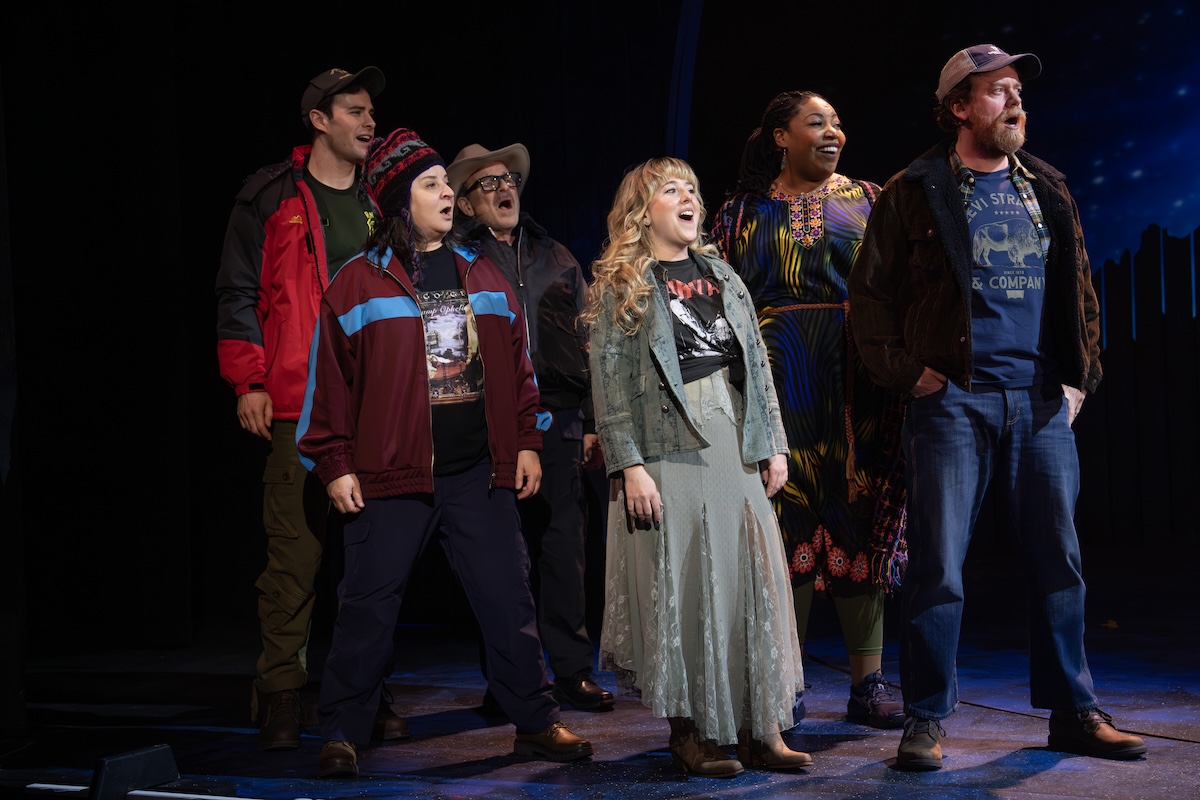
Is her work apart from the still-thriving Indigo Girls an issue of want or need? Both or neither?
“Interesting question,” enthuses Saliers. “It’s all desire. Writing for the musical theater is a brand-new avenue for the creative process for me, and I love being able to have, and do, those sorts of things. And while so much of my writing for the Indigo Girls may sound autobiographical, it really is just me plucking random things from other peoples’ stories, or going into my imagination and finding something fresh. Especially on many of my sadder, slower songs. If they were all about me, I would surely be, like, this really miserable person with a (forever) broken heart.”
Saliers says empathy compels her to write inside and outside of Indigo Girls, and enables her to inhabit the moon over the misbegotten.
“I’m interested in human beings,” she says quietly. “What drives them, what pushes them into relationships, what pulls them out of those relationships.”
And, in the case of Starstruck, what would make one woman write love letters to another as a favor to another hopeful suitor before falling in love herself.
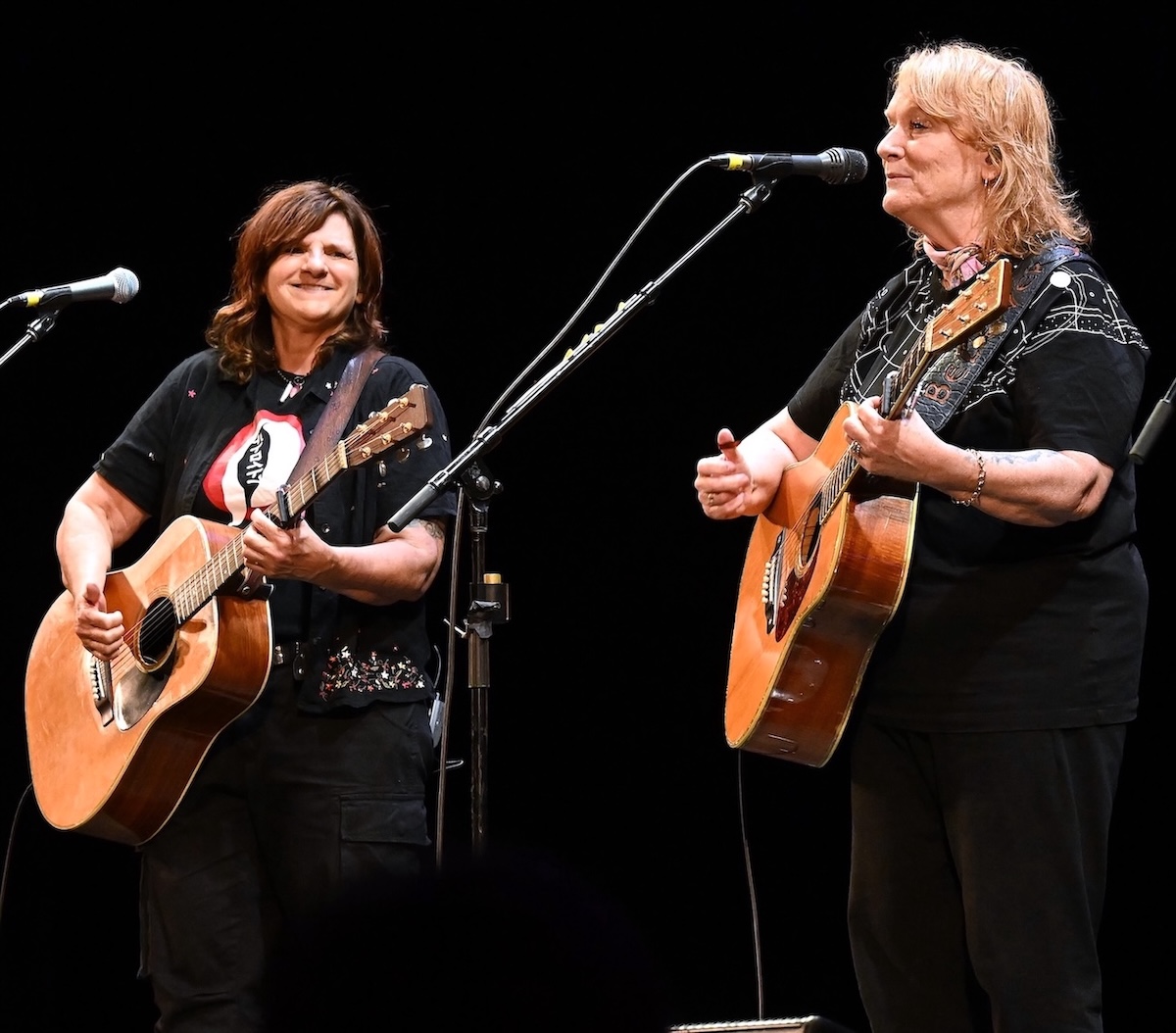
“I hate the word ‘frontier’ because of its historical connotations, but writing songs and lyrics for musical theater is a new frontier for me,” Saliers says. “There’s such a difference between writing songs that set a scene as opposed to those designed, steadily, to move the action of a story along.”
A fan of the musical theater work of Stephen Sondheim, Saliers had to resist the inclination to write what she sings—loudly—as “theaaaaatah saawwwngs,” for Starstruck. As she does with Amy Ray in Indigo Girls, Saliers focuses her writing on constant reinvention, “never doing the same twice, and seeking new ways to use metaphor, analogy, and fresh poetic language without sentimentality… I’m really trying to shed that sentimentality that may have been there in the past. I’m just looking to hone my craft.”
Saliers states that this “frontier” was occasionally rocky terrain as she, Malone, and co-script writer Mary Ann Stratton struggled over the authors’ desire to use existing Indigo Girls songs for Starstruck.
“I really wanted to move forward and write exclusively new music,” says Saliers. “Even Lorin (Latarro, Starstruck’s director-choreographer) had to calm me down by showing me that there was both space for, and need for, some older music of mine.”
Latarro, the Broadway director who steered the pair towards the historic Bucks County Playhouse—home to countless premieres with legacy actors such as Robert Redford, Dick Van Dyke, and John Lithgow—adds that, at present, “Starstruck is a nice mix of newer music and classic Indigo Girls tracks such as “Galileo.”
“As long as it was over that 50% mark, more new music than old so that it doesn’t come off like a jukebox musical, I’m happy,” says Saliers. “So, to answer your question, my work on Starstruck was born of desire, and now I can’t get enough. Which is great, especially since my 13-year-old daughter is a theater actor and singer (with recent Broadway credits in Frozen and Fiddler on the Roof), so now it’s all in the family.”
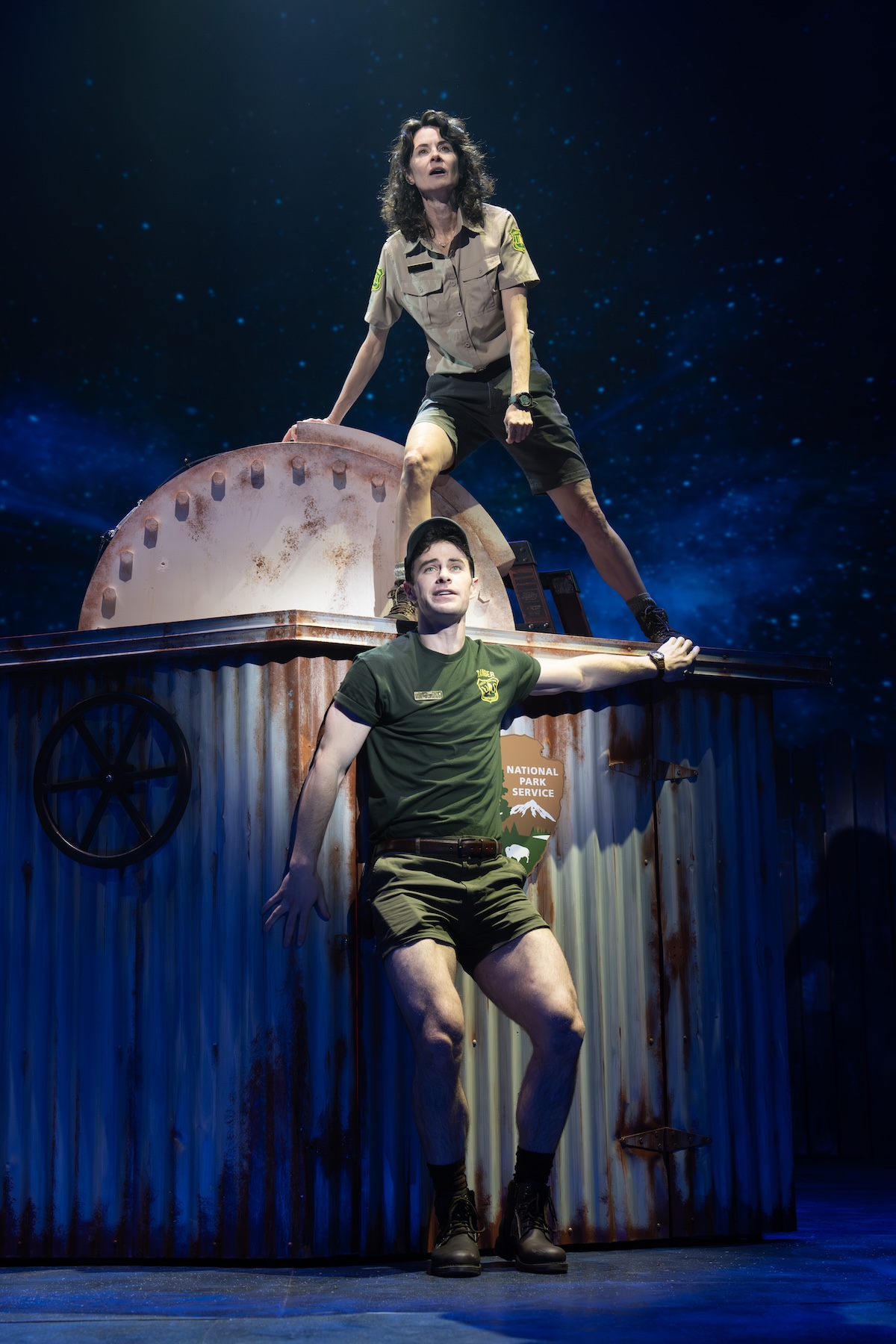
Returning to the subject of the Starstruck and its Cyrano de Bergerac-influenced storyline, Malone reminds us that the 17th century man of letters’ beloved tale has been a jumping-off point for several hit rom-coms, including Steve Martin’s Roxanne and Tom Hanks’ You’ve Got Mail.
“The structure of writing letters under the guise of someone else in which to express one’s feelings is a classic trope,” says author Malone. “Writing a love letter that speaks from one’s true heart while hiding behind this device—then the discovery that it’s not this one but that one writing the letters, and that that one is not this man, but rather this woman writing the letters—that’s what’s intriguing. So is having the letter writer herself not realizing that she’s fallen in love until she’s fallen deep. Add all of that together, and Starstruck lives in this wonderful land of discovery on all fronts.”
For an added measure of discovery and eco-conscious sustainability, Malone set the musical comedic action of Starstruck in a dark-sky preserve—a designated area where its residents agrees to reduce external lights to better appreciate the naturally dark night sky and reduce light pollution.
“That way they can have a great view of the stars and the Milky Way,” says Malone, of a shimmering night skies’ romanticism. Add in lead characters such as an astronomer, a bar owner, and a podcaster chasing a story on astro-tourism, whose NPR affiliation the writers ultimately wrote out of the script,, and the comedic drama of Starstruck is complete.
“We’re not sure that the subject matter that we’re doing in the podcast is under NPR’s umbrella, so we cut it, actually,” says Malone. “We just didn’t feel like dealing with it.”
When I ask if the NPR script trimming has anything to do with the current presidential administration’s bad feeling toward the National Public Radio broadcasting network, Malone assures me otherwise. “We already had the national parks in there, and the fact that there are no more park rangers to speak of, so it’s just another…. rewrite.”
As previews commence in New Hope on the weekend of February 20, everyone at Starstruck central is focused on making every facet of their musical shine as brightly as the stars in a staged night sky.
Of the process of writing for star seekers, barkeeps, and podcasters, Saliers laughs and says, “So many more of my songs for this show have been cut than have been used. First, they work, then they don’t work, anymore. Again, it’s a learning curve. And I do fight for the songs I believe in. But, you really do learn, fast, to focus your craft for the task at hand.”
When the subject comes up of what new track Saliers wrote first for Starstruck, she play-act indignance and says, “I don’t remember, but I’m sure it doesn’t exist still. It had something to do with our lead’s grandmother, a star mapper and EPA activist who tied herself to a thresher.”
Saliers sounds mostly assured that one of her new songs, Starstruck’s showstopper, “What Lies Between,” is indeed still part of the production. “It is a love song, and it is about mystery. What is there. What isn’t there. In the end, it is a culmination of what happens with the characters and what they’ve been through, together.”
Director Latarro, whose Broadway credits include Pete Townshend’s Tommy and Sara Bareilles’ Waitress, quickly adds an observation as to the work of name-brand songwriters.
“You work with rock and pop stars and they’re used to having their songs appreciated with platinum albums, or they get a Grammy,” says the director. “And then, all of a sudden, they’re writing for musical theater, their songs are getting cut, and it’s like whoa! what? It’s got to be jarring, but that’s how it works—scenes get added, scenes get cut—whole characters and storylines disappear. If a scene changes, the song has to accommodate that.”
“When Amy and I prepare to go in to record an album, we don’t have a bunch of extra songs under our belt,” notes Saliers. “She might have six. I might have six. And there’s the whole album. Starstruck is a very different process, one where I had to write 20, then maybe 13 get used. Or six.”To this, and all that is Starstruck—and all that isn’t—Beth Malone looks over at Emily Saliers and brightly adds, “I guess you’ll have that many more songs for that next Indigo Girls album.”
Leave a comment