
Most people would probably die of embarrassment if their family photos leaked out into the world. But not the Schaldas.
When Bill and his three sons Will, Paul, and Carmine—AKA the Sha La Das—finish recording one of their soulful doo-wop singles or albums, they purposely choose a glossy relic from the family albums for the cover art.
On their 2018 debut Love in the Wind, family matriarch Linda appears dressed in a wetsuit, frolicking in the ocean on a family vacation. For the holiday single “Sha La Da La La (Christmas Time),” re-released late last year, Bill is dressed as Santa trying to hold on to one of his screaming sons who’s trying to break free.
Music videos have also featured scratchy footage from Bill and Linda’s wedding. The band’s Instagram profile, too, is a voyeuristic peep hole into the family sideshow where you can almost feel Bill and Linda’s ’70s polyester fabric in the snapshots from their early married life and put the color into black-and-white images of Bill in his military best before going off to war.
The aesthetic fits well with the group’s warm vintage sounds that call to mind other gilded family harmonizers like The Beach Boys and The Everly Brothers. But more practically, the design choice “saves money on professional photographers,” Bill joked during a Zoom call from his home studio in Texas before conceding, “It’s also just who we are: a family group.”

Dressed in a white button-down shirt and black vest, with his long white hair pulled back in a ponytail, the 79-year-old looks like a true bandleader who takes seriously his role as someone who happily came out of retirement to work with his sons.
“I tried golf for a while and wasn’t successful at golf, so I said I think I’ll buy guitars instead. That’s something I know I can do,” he joked, proud of the impressive collection behind him, dotted with pristine Gretsches, Gibsons, and Rickenbackers.
Bill had a first shot in the biz decades ago but never thought it would come back around again. In his teens, while growing up in Brooklyn, he was a member of vocal troupes The Fluorescents and The Montereys. “I started singing about 10 or 11 years old. I sang a little in church, but then all of a sudden, there was this explosion of what has now come to be known as doo-wop music,” he explained, citing examples like Frankie Lymon and The Teenagers, The Cleftones, and The Flamingos.
“Everybody was out singing on the street corners, and you could find a group that you wanted to join and try to sing with them,” he recalled. “If you did well, you stepped in a little more. If you didn’t do well, you kind of stepped out and let the other guys take over. Eventually, as things happened back then, you’d find some guy who called himself a producer, and you’d get involved with various characters.” He did that “for a while,” but then met Linda and had to find employment, as kids were on the way. “And the only time I ever got involved in music again,” he said, “was to sing them to sleep at night.”
As his three sons grew older, Bill taught them those same beloved harmonies from the family’s Staten Island stoop, using “Sesame Street” as a guide. Soon enough, the boys found their way into music, too. Among other projects, Will aka SWIVS and Paul (of Paul & the Tall Trees) wound up working as members of the Extraordinaires, the backing band for the late “Screaming Eagle of Soul” Charles Bradley, until the crooner’s death in 2017.
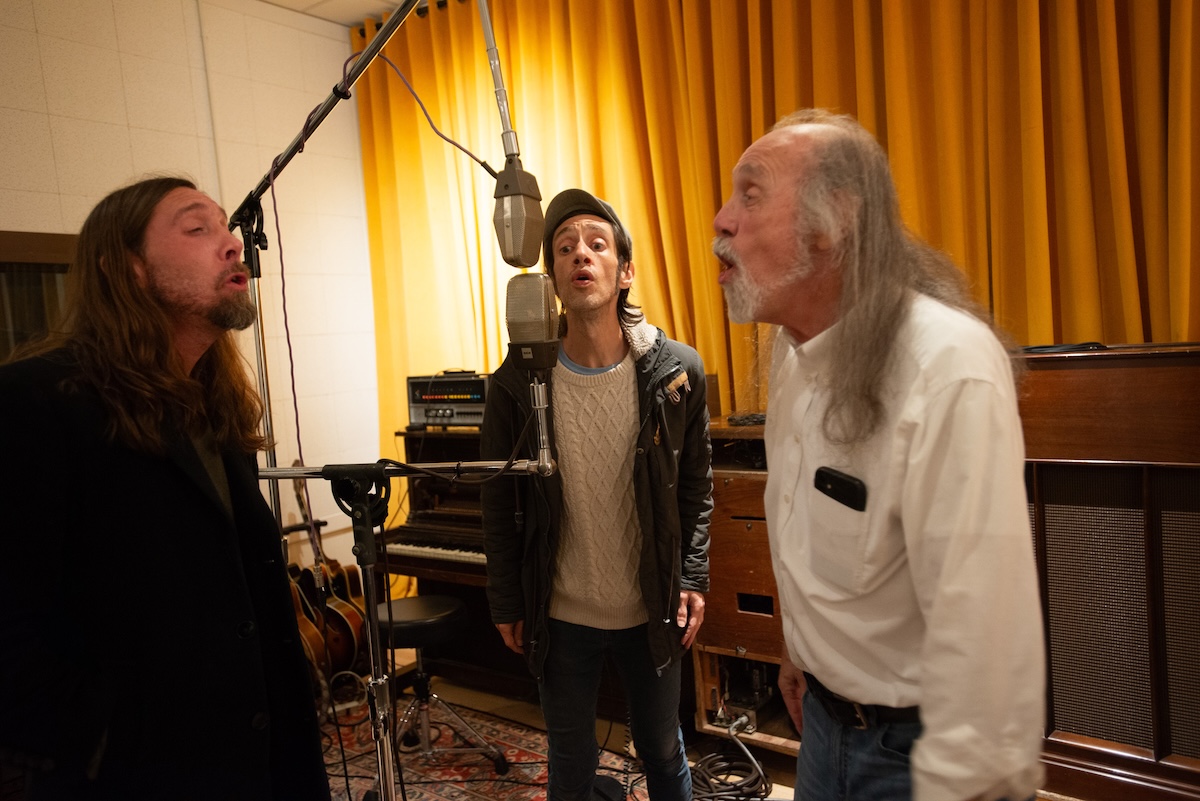
“Charles was a sweetheart. He occasionally would come to our home for Thanksgiving dinner or Christmas dinner. He was just a wonderful guy,” Bill remembered, taking down a photo of him and Bradley that hangs on the wall in his studio, right next to his guitars.
There’s a unique thematic thread to both of their stories. Like Bill, Bradley found prominence as a musician later in life when he was signed by Daptone Records in the early 2000s. The label released Bradley’s official debut when he was 62, after years of toiling through personal hardship and working as a James Brown impersonator. (His incredible story is the focal point of the 2012 documentary Charles Bradley: Soul of America). And it’s because of Bradley and his producer Thomas Brenneck that Bill found his way back to music.
“When I was about 65 years old, Tom said to me, ‘Why don’t you do some backing stuff for Charles Bradley?’ They brought me in [for the song “Victim of Love”] and that’s basically how I got back in as an old man,” Bill recalled.
“The thing that resonated for me with both of them [Charles and Bill] was that they were the genuine article,” shared Brenneck, who signed the Sha La Das to his label Diamond West Records and has famously worked with Sharon Jones & the Dap-Kings, Lee Fields, Danielle Ponder, The Budos Band, and Amy Winehouse over the years. “Charles was a bonafide soul singer who could devastate any room by singing one phrase in a microphone, and Bill is a legit doo-wop singer who cut a one-off 45 as a teenager in 1965 and could still devastate a room with his voice all these years later. It was their voices, pure and simple, that excited me.”
Brenneck grew up on Staten Island, not far from where Bill and Linda raised their boys. There was a small music scene in the borough, and Brenneck quickly became a fan of Paul and Will’s early bands, calling Will “the best musician I knew around then” and remembering crowds singing along to Paul’s songs when they were very young.
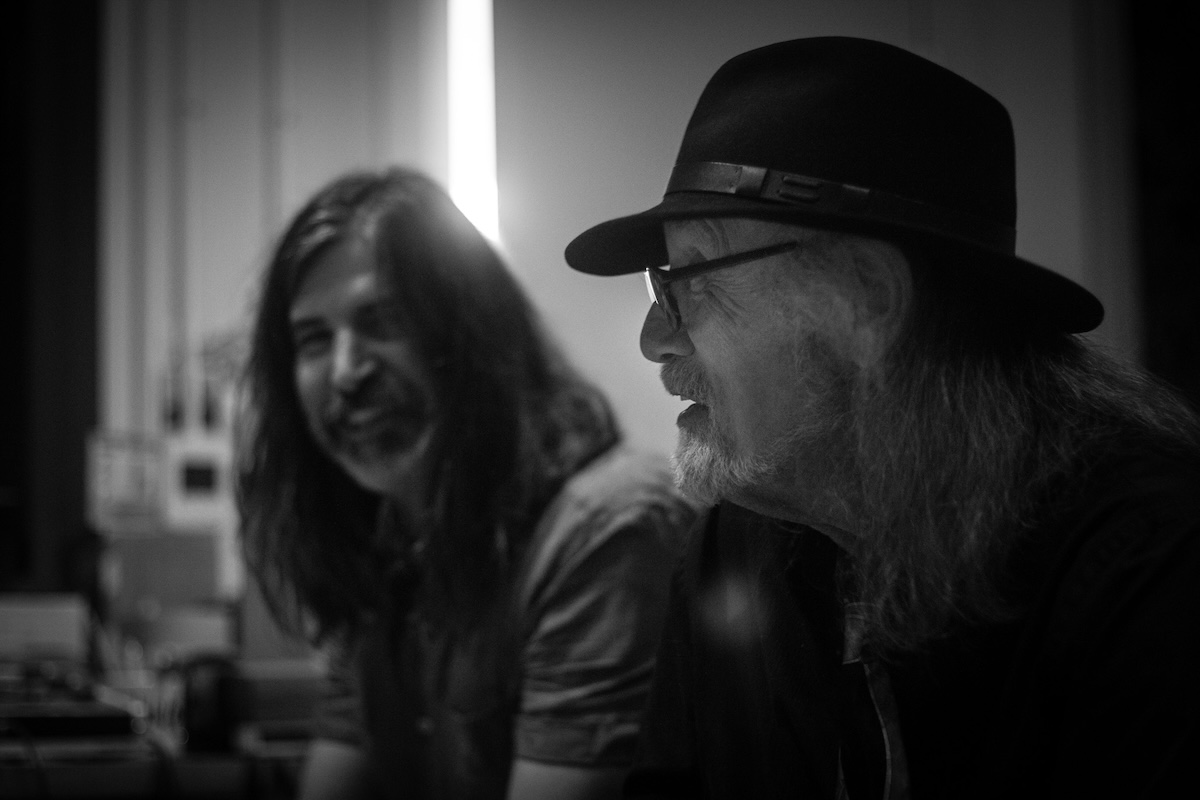
Years later, when Brenneck heard Bill sing, it had the same effect. “I was blown away. I instantly thought, I wanna make a record with that guy! And when I heard Bill, Will, and Paul sing together, I knew there was something special there.”
Brenneck has been working with the Sha La Das ever since, helping to home in on their unique blended sound that takes in the sons’ varied influences of hip-hop, country folk, and lo-fi rock, alongside Bill’s decades of dormant material. “Bill had a large collection of songs written over the years but we needed to figure out what the style of the album was going to be,” said the producer. “I wanted it to land in that small era of post doo-wop soul. Soul but with big doo-wop harmonic sensibilities.” The sound, magnified through a modern lens, started to gel on the debut Love in the Wind and reaches its peak on the appropriately named follow-up Your Picture, released January 16 with silky smooth R&B flavor on songs like the title track as well as the glossy psychedelics of “Stop Using My Love.”
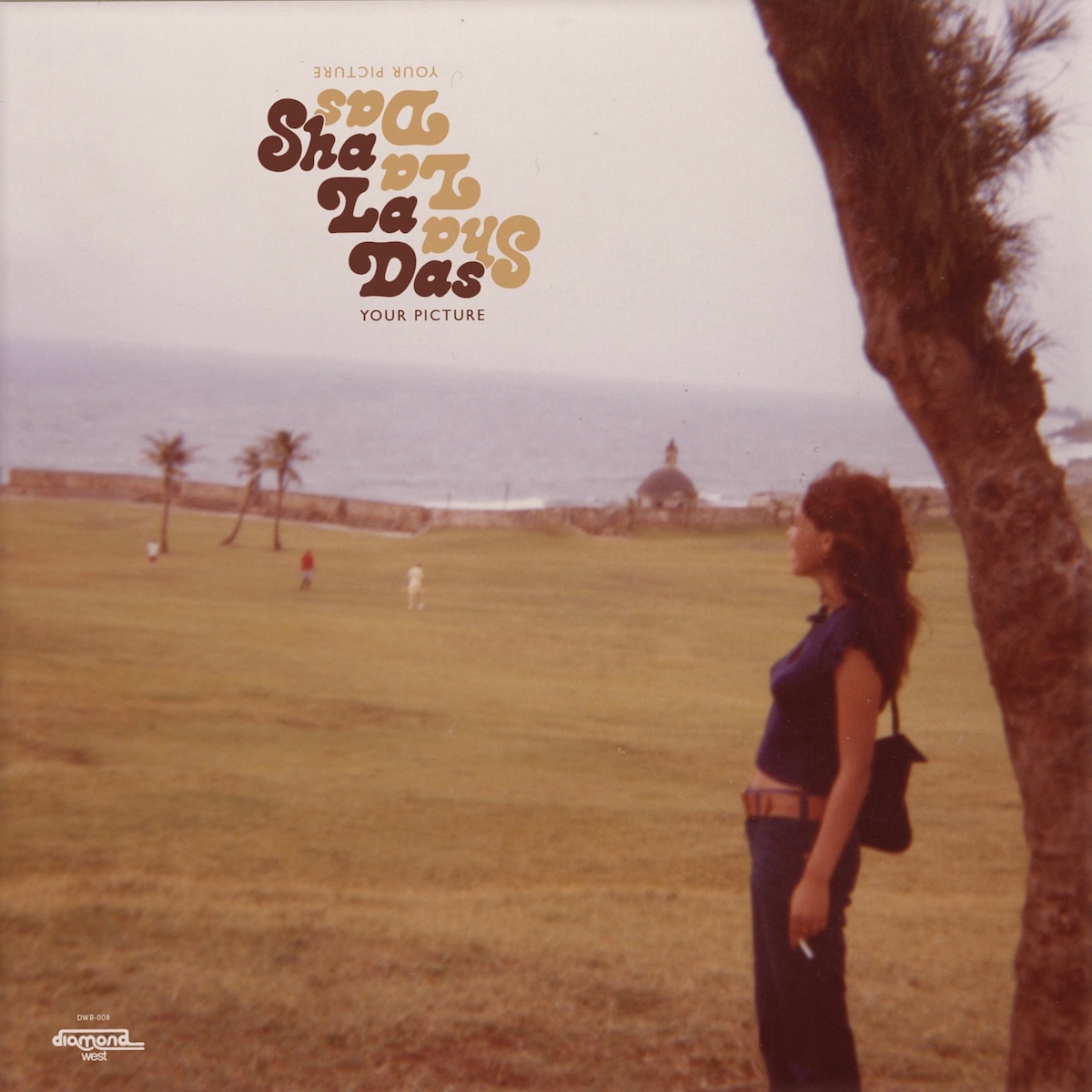
The cover art for Your Picture again features matriarch Linda in a reflective pose looking out at the Castillo San Felipe del Morro in Puerto Rico, where she and Bill honeymooned in 1972. The album is also dedicated to her, and when Bill starts talking about the title track, it’s safe to assume she was the muse. “There are these triggers that can bring memories back from all over the place, and sometimes you can hear a song and immediately it will take you back to 1965,” he philosophized. “Another of those things is a picture. You can look at a picture of someone and it can take you right back.”
Like many other serendipitous moments in Bill’s life, he first met his future wife in the late ’60s at one of his shows at the now-shuttered Brooklyn nightclub Cotillion Terrace. It was a gig neither one of them wanted to be at.
“I was with a band that I was just kind of marking time with. And she was there because her friend wanted to be there, and the friend’s father wouldn’t let her go unless Linda accompanied her. … You can’t plan these things. They just happen,” Bill said, calling his wife “an informal advisor” for the band. “She’s always been involved,” he added. “Somehow she managed to produce a first tenor, a second tenor, and a baritone, which made for great harmonies.”
Even though the Schaldas are thousands of miles apart (Bill and Paul in Texas, Carmine in New Jersey, and Will in Southern California), they manage to make it work—in spite of the odds being stacked against the survival of most family bands.
“I think their respect for Bill is the key. That’s what holds it all together,” Brenneck theorized. “Do I get to witness them get worked up, drive each other crazy, and lose patience with each other in sessions? Yes. That happens with any band, especially a family band, but it’s thrilling watching and hearing Bill and his three sons sing together. We’re all proud of the body of work we’ve had the privilege to make.”
“There’s a desire to make it work,” Bill added. “Once we get into the studio, we’re able to do what we have to do. Once we get on the stage to do the shows, we’re able to do what we do. We’re just having a good time and enjoying it.”
That positive attitude is precisely why the group’s debut Love in the Wind never became the one-trick pony Bill thought it might be. “We figured, isn’t this lucky that this came together the way it did? There are so many times that you hear of groups who have a big splash with something, but then it kind of implodes,” Bill postured. “But the itch kept coming, and we were all still writing songs, and eventually it just creeps up on you and you want to keep going.”
And even with the new album just finding its way, Bill’s already thinking ahead to the future and the next generation of Schaldas who can carry on the Sha La Das name: his grandkids. “You hear them humming or tapping their feet and, all of a sudden, it’s like, hey, he can really carry a tune. Or, she’s got a nice range. It’s one of those things that it’s either in you or it isn’t. It could skip a generation, but I think it’s there for them, too.”
Leave a comment